Why Your Small Business Podcast Isn't Growing, And What to Fix in the Edit
Most small business podcasts don't fail because of the content. They stall because of pacing, packaging, and the clips that never got made. Here's what to fix.

Plenty of small business owners start a podcast for exactly the right reasons. It's a way to demonstrate expertise, tell customer stories, and give people a reason to trust you before they ever call. Then, twelve episodes in, the download numbers are still flat and the whole thing quietly stops.
The usual conclusion is that the content wasn't good enough. That's rarely the real problem. Most small business podcasts have genuinely useful material in them, it's buried in a format nobody discovers, and packaged in a way that asks too much of a first-time listener. Almost all of that is fixable after the recording, in the edit.
The First Ninety Seconds Decide Everything
Listeners give a new show far less patience than most hosts assume. If your episode opens with a musical intro, a welcome, some housekeeping, and a bit of catching up before you reach the point, you've spent your entire margin before saying anything of value.
Flip the order. Open cold on the strongest thirty seconds of the conversation, a surprising claim, a specific number, a customer's actual problem, and let the intro come after. This is standard practice on shows that grow, and it costs nothing except an editing decision. If your best moment is at minute 34, it belongs at second 5.
The same applies to length. A tight 25-minute episode beats a rambling 55-minute one almost every time for a business podcast. Cutting isn't about respecting your listener's time as a courtesy; it's about completion rate, which is the metric every podcast platform uses to decide whether to recommend you.
The Clips Are the Discovery Engine
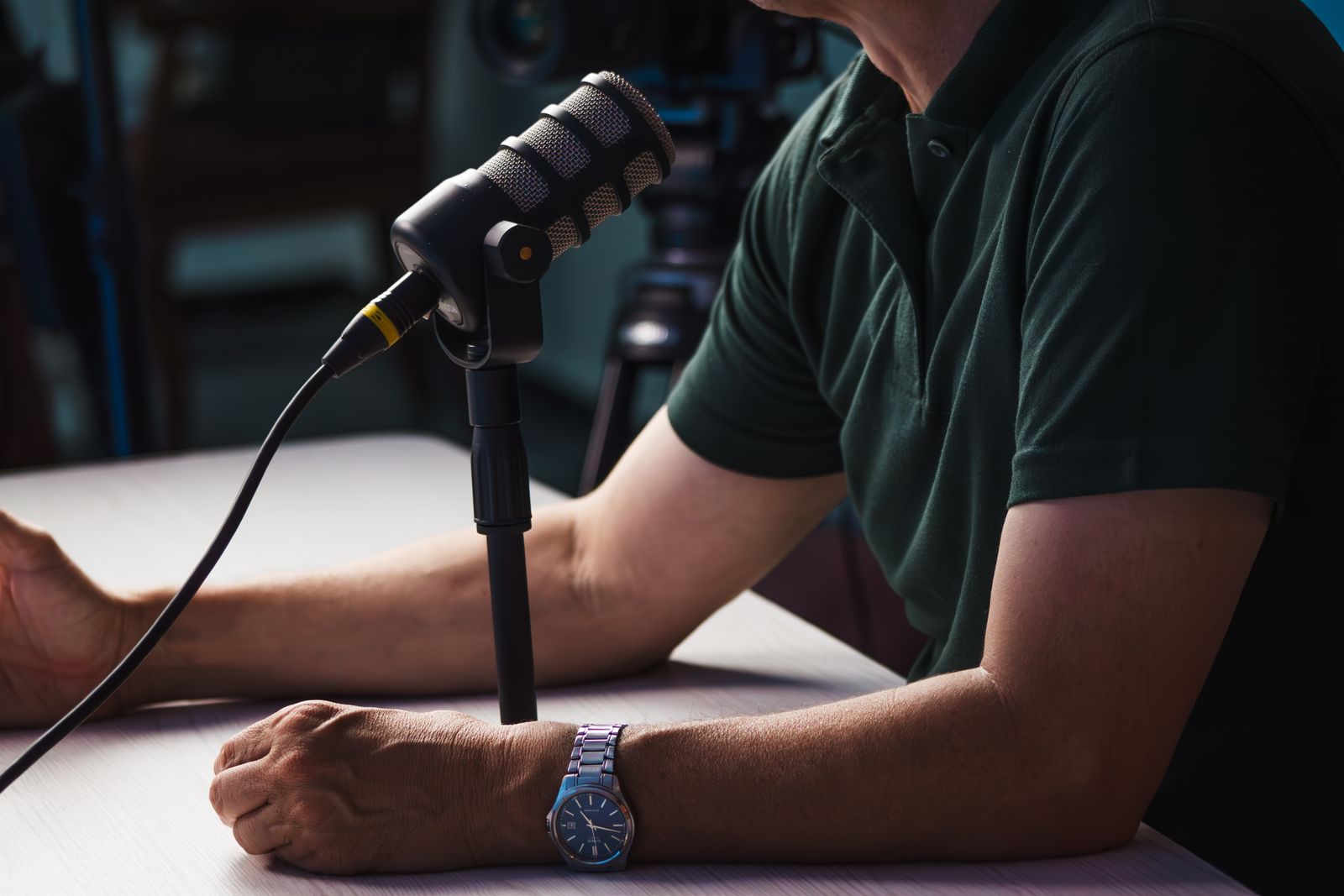
Here's the thing that most small business podcasts get wrong: almost nobody discovers a podcast in a podcast app. They discover it on Instagram, TikTok, YouTube, or LinkedIn, through a clip.
If your show only exists as full episodes on Spotify and Apple, you're relying entirely on people already searching for you. That's not a growth strategy for a business that isn't famous yet. The shows that grow treat every episode as raw material for five or six short vertical clips, each built around a single complete thought, captioned, and posted where people actually scroll.
A good clip isn't a random 45 seconds. It has a hook in the first two seconds, one idea, and a clean ending. It works on mute, because most of your audience is watching without sound. And it doesn't need to sell the podcast, if the clip is useful on its own, a percentage of viewers will go looking for the full episode themselves.
Record Video Even If You Publish Audio
If you're only capturing audio, you've cut yourself off from the single best distribution channel available. Video podcasts can be uploaded to YouTube, the second-largest search engine, where episodes get indexed, recommended, and surfaced in search results months after publishing. Audio-only files can't do that.
You don't need a studio. Two cameras, or even one camera and a phone on a tripod for a second angle, is enough. What matters is that the footage exists so an editor can cut both the long-form video and the vertical clips from the same session.
Fix the Audio Before Anything Else
Listeners will forgive average content with clean audio. They will not forgive great content with echo, uneven volume between speakers, or a guest who sounds like they're in a parking garage. Room echo is the most common problem and the hardest to remove after the fact, which is why recording in a smaller, softer room matters more than buying a more expensive microphone.
In the edit, the fixes that make the biggest difference are unglamorous: leveling the speakers so nobody has to touch the volume, removing long pauses and filler, and cutting the tangents that made sense in the room but don't survive on playback.
Consistency Beats Volume
A show that publishes every other Tuesday for a year will outgrow one that publishes eight episodes in a month and then disappears. Platforms reward reliability, and so do listeners. Pick a cadence you can actually maintain around running your business, even twice a month, and hold it.
Where This Usually Stalls
Recording an episode takes an hour. Editing it, pulling the clips, captioning them, and formatting each one for its platform takes considerably longer, and that's the step that quietly kills most small business podcasts. The recording keeps happening until the backlog of unedited files gets too heavy, and then it doesn't.
That's the part MorganMade handles. MorganMade edits podcasts end to end, cleaning up the audio, tightening the episode, cutting the short-form clips, and building the graphics that make the whole thing look like a real show. If you've got episodes recorded and sitting unpublished, or a podcast that's being made but not being found, that's a very fixable problem.
*This post was created with the assistance of AI.*