How to Get Customer Testimonials on Video (Without Anyone Feeling Awkward)
Video testimonials are the most persuasive content a small business can own. Here's how to ask, what to film, and how to turn one conversation into proof that travels.
You can say your business is reliable, fair, and good at what it does. A customer saying it for you is worth more than every adjective on your website combined, and everyone knows it, which is why written testimonials have quietly stopped working. A block of italic text with a first name and a last initial reads as something a business wrote about itself, whether or not that's true.
Video is different. A real person, in their own kitchen or shop or driveway, using their own words and pausing in the wrong places, can't be faked in the way a text quote can. For a small business competing against larger companies with bigger ad budgets, that credibility is one of the few advantages that money can't easily buy.
The problem is that asking feels awkward, and most owners never get past that. Here's how to do it in a way that's comfortable for everyone and actually produces footage you can use.
Ask the Right Customer at the Right Moment
Timing does most of the work. The best moment to ask is right after something went well, the install is finished and they're happy, the event wrapped, the problem got solved faster than they expected. Waiting three months means asking someone to reconstruct enthusiasm they've already moved on from.
Be selective. You don't want ten testimonials, you want three or four from customers who represent the kind of work you want more of. If your best margin is on kitchen renovations, don't feature the small repair job. The testimonial you publish is also an advertisement for the type of customer you're hoping to attract.
And ask the specific person, not a list. A personal message that says "you mentioned the timeline surprised you, would you be willing to say that on camera for about five minutes?" gets a far better response rate than a mass email asking for feedback.
Six Questions That Get Usable Answers

Never hand someone a script. The moment a customer tries to recite lines, the whole thing dies, and the reason video testimonials work in the first place is that they sound unrehearsed. Instead, ask questions and let them talk.
These six, in order, will produce everything an editor needs:
"What was going on before you called us?" This gets the problem stated in the customer's own language, which is often the exact language your future customers are searching with.
"What made you hesitate?" The most valuable answer in the whole interview. When a customer says out loud that they worried about the cost, or that they'd been burned by a previous contractor, it addresses the same fear sitting in your next prospect's head.
"What actually happened?" Let them walk through it. Details make it believable, and details are where the specifics live.
"What surprised you?" This is where you get the line you'll build the whole clip around, because surprise is what people remember and repeat.
"What's different now?" The outcome, in practical terms. Not "they were great," but "we've had zero problems in eight months."
"Who would you tell to call us?" A natural closing line that does the recommending for you.
Ask follow-ups. If an answer is vague, say "can you give me an example?" and wait. The silence after a question is where the good material comes from.
Make It Painless to Say Yes
Most people say no to a video testimonial because they picture a production. Remove that picture.
Tell them upfront it takes fifteen minutes, that you'll come to them, and that nothing goes public without their approval. That last part matters more than you'd think, and honoring it builds the kind of relationship that produces referrals anyway.
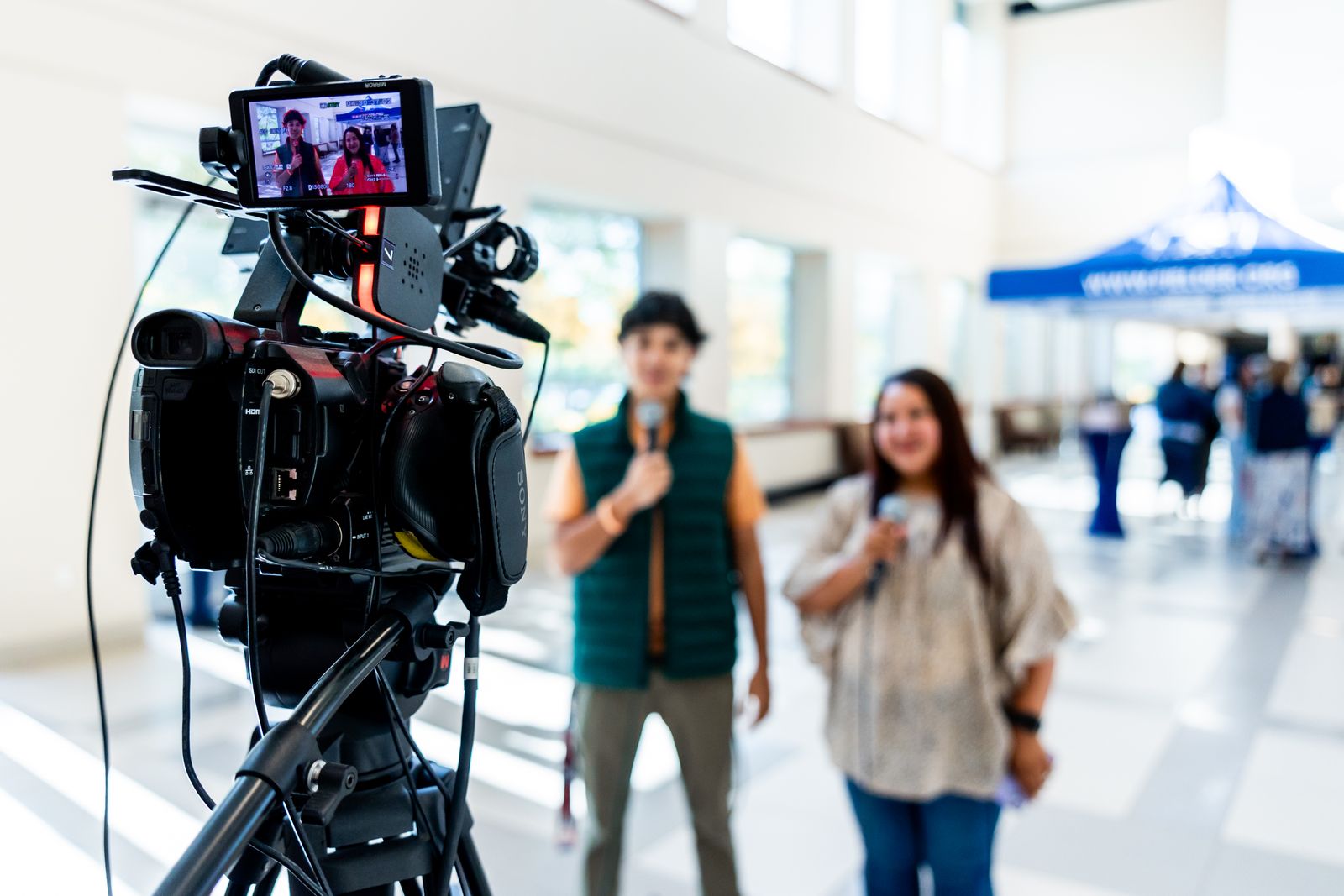
Keep the setup small. A phone on a small tripod at eye level, the person facing a window rather than sitting in front of one, and a cheap clip-on microphone or a phone recording audio nearby. Filming in their space rather than a studio makes them more relaxed and makes the footage more convincing. Ambient sound from a real workshop or storefront reads as authentic, not sloppy.
Also grab two or three minutes of b-roll while you're there. The finished work, the space, them going about their day. A talking head cut against footage of the actual result is dramatically more watchable than fifteen straight minutes of someone in a chair.
Where the Finished Clips Should Live
One fifteen-minute conversation should become several things. A 60 to 90 second edit for your homepage and service pages, where it does the most direct work on people deciding whether to call. Two or three vertical clips of 20 to 30 seconds each, built around single strong lines, for social. And a YouTube upload titled with the actual service and location, which quietly keeps working in search for years.
Put the strongest sentence at the very front of every version. The instinct is to open with the customer introducing themselves, but nobody stays for that. Open on "I honestly thought it was going to cost twice that" and introduce them afterward.
Caption everything. A testimonial watched on mute with no captions is a stranger's face moving silently, which persuades nobody.
The Part That Turns Footage Into Proof
Fifteen minutes of a customer talking is raw material, not a testimonial. What makes it work is the edit, finding the four or five sentences that carry the whole story, cutting the tangents and the throat-clearing, layering in the b-roll, adding captions and a clean lower third with their name, and cutting a version shaped for each place it needs to live.
That's what MorganMade does. MorganMade takes raw footage from small businesses, creators, and organizations and turns it into polished website videos, captioned short-form clips, and YouTube edits built to hold attention. If you've got happy customers and a phone camera, you already have the hardest part of a testimonial series.
*This post was created with the assistance of AI.*